

Cavities are one of the most common dental issues people face, and they are a direct result of tooth decay. Tooth decay happens when bacteria in your mouth produce acids that slowly break down the enamel, the outer layer of your teeth. Over time, this damage leads to cavities, which can worsen if left untreated. If you are noticing early symptoms or have concerns about bad teeth, visiting a Penticton dentist early can help stop tooth decay before it progresses.
Early Signs of a Cavity You Should Not Ignore
Recognizing the signs of a cavity early can save you from more extensive dental work later. Many people assume cavities always cause pain, but that is not always the case in the early stages.
Common signs of a cavity include:
- Tooth sensitivity to hot, cold, or sweet foods
- Visible dark spots or holes on the tooth
- Pain when biting down
- A rough or chipped feeling on the surface of the tooth
- Food getting stuck in a cavity between teeth
A cavity between teeth can be especially difficult to detect without professional exams, which is why regular visits to dentists in Penticton are so important. Early detection often means a simple cavity filling instead of more complex procedures.
The Different Cavity Stages and What They Mean
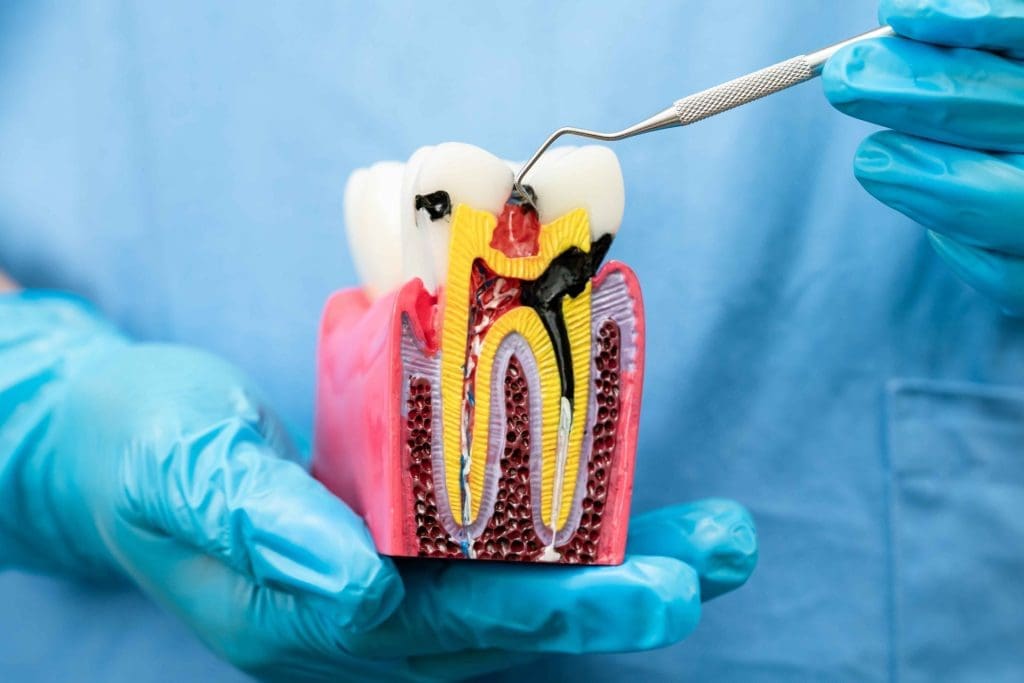
Understanding cavity stages helps you see how tooth decay progresses over time. Cavities do not form overnight, they develop gradually as plaque, bacteria, sugar, and acid wear down the tooth’s protective enamel. Knowing the stages can help you recognize when it may be time to book an appointment before a small concern becomes a bigger dental issue.
Demineralization
This is the earliest stage of tooth decay, where minerals begin to weaken the enamel. You may notice white spots forming on the tooth, which can be an early warning sign. At this stage, decay may still be reversible with improved oral hygiene, fluoride, and professional dental care.
Enamel Decay
At this stage, the enamel begins to break down, forming a small cavity. You may not feel pain yet, which is why regular dental exams are so important. Once enamel decay creates a hole in the tooth, a cavity filling is typically recommended to stop the damage from spreading.
Dentin Decay
Once tooth decay reaches the dentin layer beneath the enamel, it can spread more quickly because dentin is softer and more vulnerable. Sensitivity often increases at this stage, especially when eating or drinking something hot, cold, or sweet. A cavity between teeth may also become more noticeable when food gets stuck or floss starts to catch.
Pulp Damage
The pulp is the innermost part of the tooth, where the nerves and blood vessels are located. When decay reaches this area, it can cause ongoing tooth pain, pressure, swelling, or discomfort when chewing. Treatment may become more complex at this stage because the infection is no longer limited to the outer layers of the tooth.
Abscess Formation
In advanced cases, infection can spread beyond the tooth and form an abscess. This may cause severe pain, swelling in the gums or face, a bad taste in the mouth, fever, or general discomfort. An abscess should be treated promptly, as dental infections can worsen if ignored.
Visiting a Penticton dentist regularly helps catch cavities during the earlier cavity stages, preventing more serious outcomes.
How to Prevent Cavities and Protect Your Smile

If you are wondering how to prevent cavities, the good news is that tooth decay is largely avoidable with the right habits. Preventative care is the best way to avoid dealing with bad teeth and costly treatments.
Here are some effective strategies for how to avoid cavities:
- Brush your teeth at least twice a day with fluoride toothpaste
- Floss daily to clean areas between teeth where cavities often form
- Limit sugary and acidic foods that contribute to tooth decay
- Drink plenty of water to help wash away bacteria
- Visit dentists in Penticton for regular cleanings and exams
- Consider dental sealants for added protection
Knowing how to prevent cavities is essential for maintaining long-term oral health, and your local Penticton dentists can provide personalized guidance based on your needs.
Why Cavity Fillings Are Important for Tooth Health
A cavity filling is one of the most common treatments used to restore a tooth affected by decay. When a cavity is detected early, a filling can stop the spread of tooth decay and preserve the natural structure of your tooth.
During a cavity filling procedure:
- The decayed portion of the tooth is removed
- The area is cleaned to eliminate bacteria
- A filling material is used to restore the tooth’s shape and function
Modern filling materials are designed to be durable and blend naturally with your teeth. Prompt treatment by a Penticton dentist ensures that cavities do not progress into more serious dental issues.
Why Regular Visits to Dentists in Penticton Matter

Routine dental visits are one of the most effective ways to manage cavities and prevent tooth decay. Dentists in Penticton use advanced tools to detect issues that are not visible to the naked eye, including cavities between teeth.
Regular checkups typically include:
- Professional cleanings to remove plaque and tartar
- X-rays to identify hidden cavities
- Early treatment recommendations
Choosing a trusted Penticton dentist ensures that your oral health is monitored consistently, helping you avoid more invasive procedures in the future.
Take Control of Cavities Before They Progress
Cavities and tooth decay can develop quietly, but the impact on your oral health can be significant if they are ignored. By understanding the signs of a cavity, recognizing cavity stages, and learning how to avoid cavities, you can take proactive steps to protect your smile. Whether you need a cavity filling or simply want guidance on how to prevent cavities, visiting Enamel dental Penticton is a smart step toward long-term dental health. Book your appointment today with a trusted Penticton dentist and keep your teeth strong, healthy, and cavity-free.